
We have all experienced that sudden, heart-stopping moment of complete horror. You are sitting at your desk, finishing up a massive project that took you three weeks to build, when your laptop screen suddenly flashes, makes a strange clicking sound, and goes completely black. You press the power button frantically, but nothing happens. Your computer is dead, and with it, every single family photo, financial spreadsheet, and work document you owned has vanished into thin air. In the old days, this kind of physical hardware crash meant a total disaster—an expensive trip to a data recovery lab accompanied by lots of tears and frustration.
But as we navigate the fast-paced digital world of 2026, the way we safeguard our digital lives has completely changed. We are rapidly moving away from old-school external hard drives, fragile USB sticks, and clumsy physical discs that can be easily lost, crushed, or stolen.
Instead, we have entered the era of the ubiquitous cloud ecosystem. Storing your data in the cloud is no longer just a luxury feature for tech-savvy programmers; it has become an essential utility for human life.
It acts like an invisible, bulletproof digital safety net that floats quietly above our heads, keeping our files safe, organized, and available to us at any microsecond. Let’s take a deep look into the modern world of virtual data rooms to discover how you can master your storage setup, lock down your privacy, and never lose a precious file again.
What Is Cloud Storage?
At its most basic level, cloud storage is a smart technology that lets you offload your digital baggage from your physical phone or computer onto massive, high-tech industrial server farms located across the globe. Instead of forcing your local hard drive to hold thousands of heavy video files and documents until its memory is completely choked, you upload that data over the internet into a secure virtual storage partition.
[Legacy Storage Model] ──► Physical Hard Drive ──► Tethered to One Desk ──► High Crash Risk

                                                       VS.

[Modern Cloud Engine]  ──► Encrypted Data Stream ──► Multi-Device Access  ──► Auto-Redundant Backups
Think of a cloud provider as a high-security, digital safety deposit box company. The provider handles all the complex infrastructure maintenance, runs continuous cooling systems, and monitors the physical hardware around the clock. Meanwhile, you get an easy, password-protected gateway that lets you view, edit, and organize your files from any device on earth. Whether it is a basic text note, a massive financial spreadsheet, or a high-definition movie file, the cloud holds it perfectly intact.
Why Cloud Storage Has Become So Popular
The sudden, massive explosion in cloud adoption isn’t just a passing corporate trend; it is a direct response to how chaotic our daily digital lives have become. The average human being now creates more data in a single month than our parents did in an entire decade. We are constantly snapping high-resolution photos, downloading heavy work files, and hoarding digital media until our phones scream that they are completely out of space due to local storage saturation.
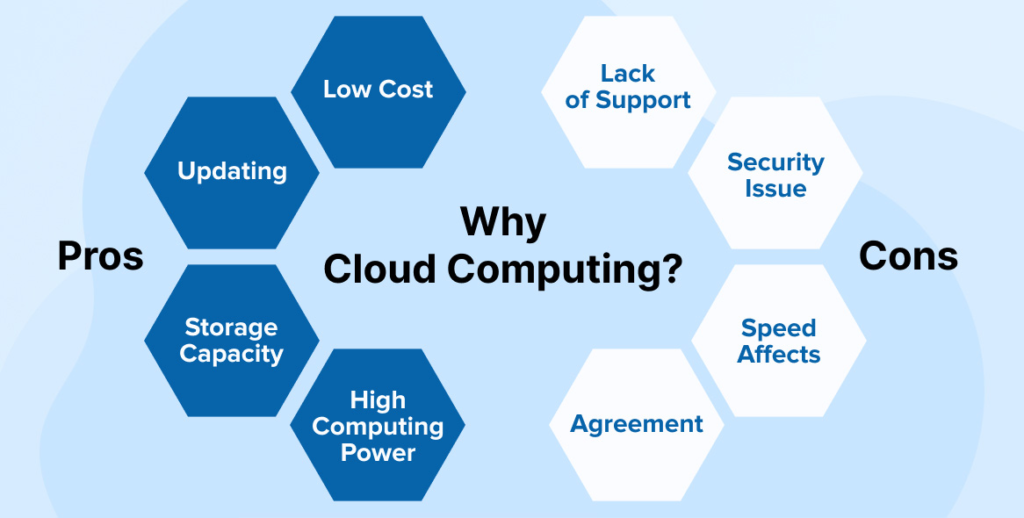
Moving your files to a digital server completely shatters this storage bottleneck. It grants your devices a form of endless memory expansion, allowing you to instantly clear up space on your phone without deleting a single precious memory.
Furthermore, because our files live safely on the web rather than being trapped inside a physical piece of plastic, we can walk away from our desks without feeling disconnected from our work. It brings a wonderful sense of physical freedom and digital relief to our everyday routines.
Easy Access from Anywhere
Our modern lifestyles require us to be incredibly fluid. On any given Tuesday, you might find yourself answering client emails from a local coffee shop, reviewing project blueprints on a train using your smartphone, or logging into a completely strange computer at a conference to deliver a high-stakes presentation. Surviving in this dynamic environment requires building a boundaryless data lifestyle.
                        ┌─────────────── THE MOBILITY BREAKDOWN ───────────────┐
                        ▼                                                       ▼
               [The Desk-Bound Workflow]                             [The Fluid Cloud Workflow]
               • Files trapped on a single laptop                    • Live syncing across all screens
               • Forgetting a USB drive breaks the day               • Sign in securely from any location
               • Zero ability to pivot on the move                   • Instant updates keep teams aligned
Cloud storage platforms serve as your ultimate universal bridge. The very instant you drop a document into a synced folder on your home computer, that file is automatically copied across your entire network of personal gadgets. If you leave your laptop sitting on your kitchen counter by accident, it doesn’t trigger a workplace panic attack. You can simply pull out your phone, tap your storage app, and access the exact same document in real time without missing a beat.
Improved Data Security
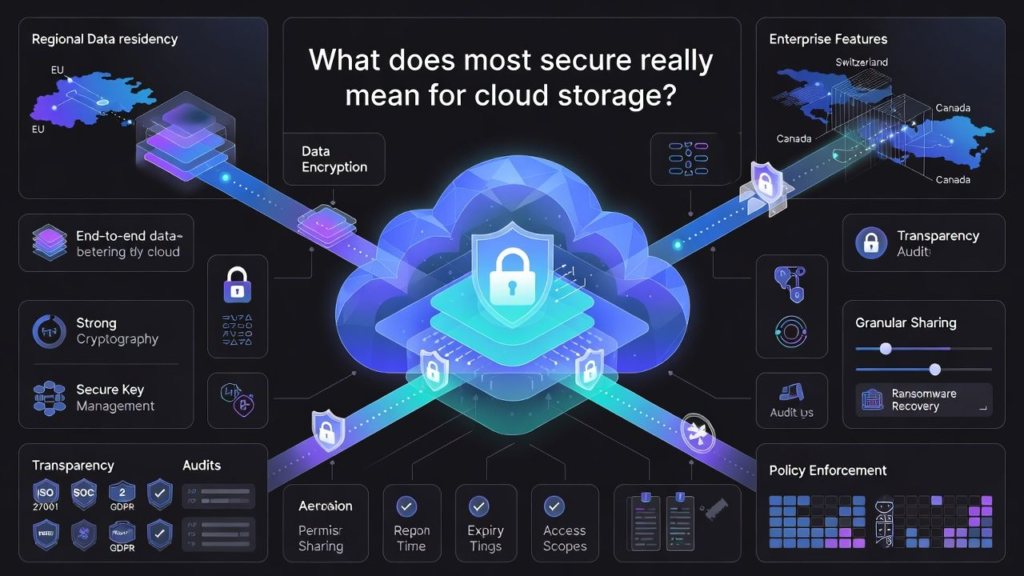
The most common question people ask when discussing virtual servers is completely natural: Is it actually safe to leave my private life floating on the internet? While it feels comforting to physically hold a plastic hard drive in your hand, the reality is that personal gadgets are incredibly vulnerable to digital hackers, physical theft, and house fires. Modern cloud networks protect your data using an advanced defense framework known as zero-knowledge architectural encryption.
When you upload a file to a top-tier modern cloud platform, the data is instantly scrambled into unbreakable code before it even leaves your device. Even if a hacker managed to intercept your file stream mid-air, they would see nothing but a meaningless jumble of random characters.
Combined with rigorous multi-factor authentication protocols, continuous automated threat monitoring, and biometrically protected server facilities, the cloud provides a level of security that a personal home computer simply cannot match.
Automatic Backup and Recovery
Human beings are notoriously forgetful creatures. We promise ourselves that we will manually back up our phones and computers every single weekend, but then life gets busy. We get distracted by family dinners, weekend chores, and favorite TV shows, completely forgetting about our data until a sudden device failure wipes out months of un-saved work. The cloud eliminates this human error through autonomous delta-sync pipelines.
[Manual Backups] ──► Requires Constant Remembering ──► Long Gaps in Data ──► High Risk of Loss

                                                       VS.

[Auto Cloud Sync]──► Runs Silently in Background    ──► Real-Time Saving  ──► Absolute Peace of Mind
Modern storage applications run quietly in the background of your operating system, consuming tiny amounts of processing power. The exact moment you make a small edit to a document or snap a fresh photo at a family gathering, the app instantly uploads those tiny changes to the server. If your phone slips out of your pocket and shatters on a concrete sidewalk an hour later, your data remains perfectly untouched. You can simply sign into your account from a new phone and watch your entire digital life restore itself in minutes.
Supporting Remote Work
The traditional concept of forcing every employee to sit shoulder-to-shoulder inside a physical office building to get work done is officially a thing of the past. The modern corporate landscape thrives on distributed, global teams working across multiple time zones. Managing this complex workflow requires a centralized digital anchor, which is achieved through collaborative workspace virtualization.

Cloud storage systems function as the virtual headquarters for modern companies. Instead of passing confusing, outdated versions of a text document back and forth through an endless chain of messy email attachments, team members can open a single, shared cloud link simultaneously.
You can watch your coworker edit a paragraph in real time from across the globe while you leave feedback comments in the margin, completely flattening communication barriers and supercharging company productivity.
File Sharing Made Simple
We have all tried to email a long video file to a friend or family member, only to receive a frustrating error message screaming that our file attachment size exceeds the strict twenty-five-megabyte limit. It is an annoying roadblock that stalls our communication. Cloud systems solve this problem completely by introducing the concept of dynamic link virtualization.
Instead of trying to force a massive, multi-gigabyte file through a narrow email pipeline, you leave the heavy file sitting safely on your cloud server and generate a simple, secure web link.
You can send this light link to anyone via a quick text message or chat app. The recipient can easily view or download the file directly from your server. Best of all, you retain full control—you can protect the link with a private password, set a custom expiration date, or revoke access permissions at any moment.
Core Digital Infrastructure Pillars
| Technology Pillar | Core Functional Impact |
| End-to-End Encryption | Scrambles data at the source, ensuring nobody but you can read your private files. |
| Delta-Sync Automation | Uploads only the small changes made to a file, saving immense cellular data and battery life. |
| Granular Access Control | Lets you dictate exactly who can view, edit, or download your shared folders. |
| Multi-Region Redundancy | Mirrors your files across multiple global data centers to protect against server disasters. |
The Role of AI in Cloud Storage
As the sheer volume of our digital data continues to scale out of control, finding a specific document inside a massive, unorganized storage drive can feel like hunting for a needle in a haystack. To save us from this digital clutter, modern cloud repositories are integrating powerful layers of semantic artificial intelligence curation.
The AI doesn’t just look at the titles of your folders; it understands the actual context of your files. It scans the contents of your text documents, automatically tags the locations and faces inside your family holiday photos, and transcribes the spoken words inside your audio recordings.
This means you can type a vague phrase like “receipt for my black leather shoes from last summer” into your search bar, and the AI will instantly surface the exact document you need in a flash.
Cloud Infrastructure Synchronization Matrix
                                 ┌──► Scrambles Data Streams Prior to Transmission
                                 │
[Centralized Cloud Hub] ─────────┼──► Distributes Copies Across Global Server Farms
                                 │
                                 └──► Deploys AI Models to Auto-Tag & Categorize Files
Challenges Users Should Consider
While the modern cloud offers a truly incredible array of daily conveniences, walking into this space with blind optimization is a recipe for future frustration. You must recognize that the cloud is entirely dependent on a consistent network access baseline. If you find yourself working from a remote mountain cabin or caught inside an airplane cabin with zero internet access, your cloud files can become temporarily out of reach.
To safeguard against this connectivity vulnerability, always make use of your app’s “Available Offline” feature for your absolute most critical files—like travel tickets, passports, and active work presentations.
This setting forces your device to keep a local copy stored directly on your physical hardware, ensuring you stay fully productive even when you are completely disconnected from the web grid.
The Future of Data Storage
As we peer over the horizon into the future of digital asset management, we are moving past basic file hosting and heading toward the frontier of decentralized cryptographic ledger networks. The next generation of storage infrastructure will completely eliminate reliance on centralized corporate tech giants.
Instead of keeping all humanity’s data inside a few massive corporate server hubs, future platforms will slice your encrypted files into thousands of tiny, unrecognizable pieces and scatter them across a secure, global network of independent participant computers. This structure makes data breaches mathematically impossible and ensures the internet remains open, free, and democratic. The cloud is evolving from a simple backup destination into a living, breathing foundation for global human knowledge.